A good dinner table welcomes people before the first plate arrives. For November, start with warm cream, a little cranberry, and space for the meal itself. This is a direction you can borrow for a wedding reception, a small celebration after city hall, or dinner with the people helping you plan. The season can live in a few details; it does not need to take over the room.
Start with what the room gives you
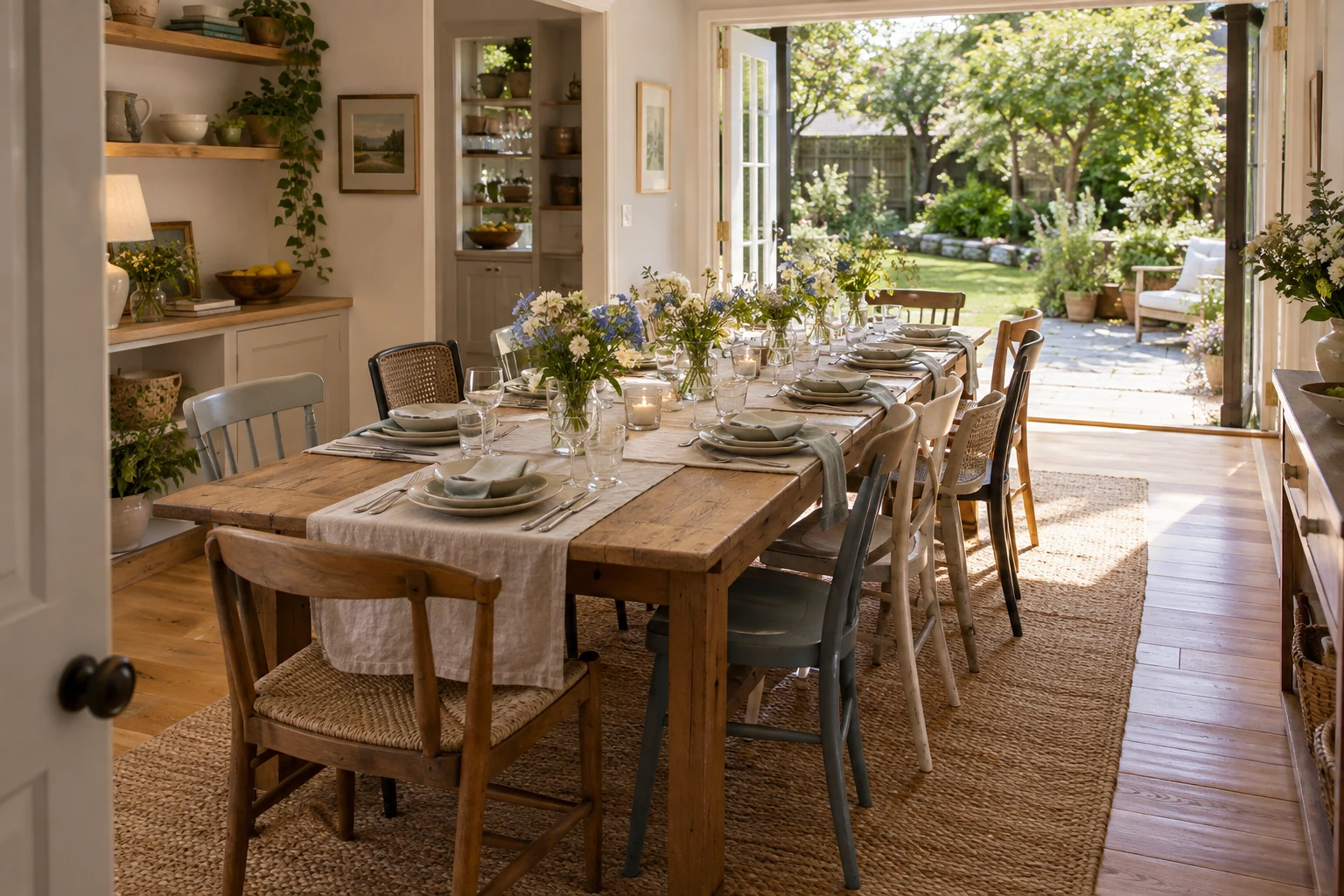
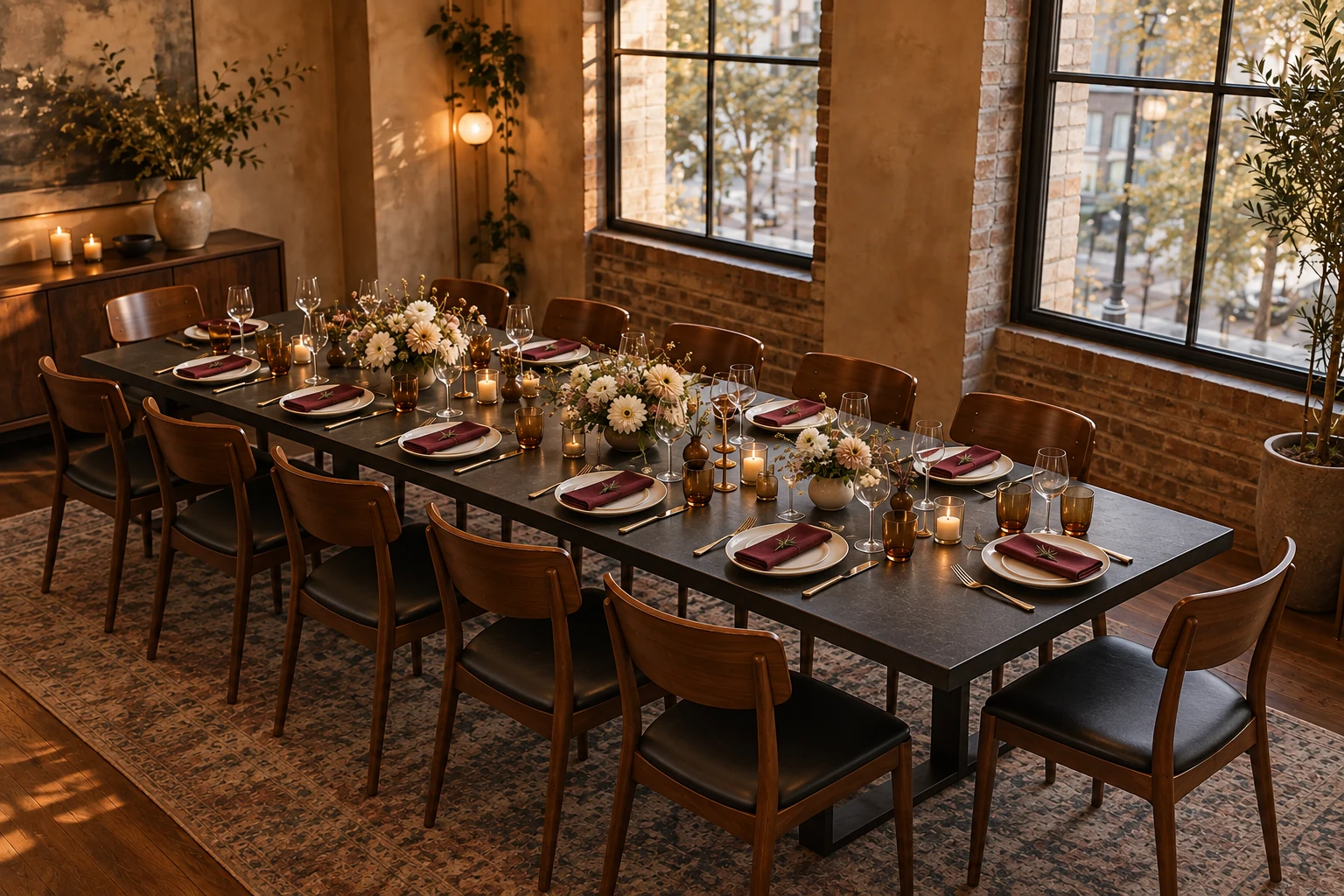
Look at the chairs, flooring, plates, and linen already included. If you have warm wood and cream dishes, you may need only a deeper napkin or a few flowers to bring the setting together. Choose one lead color and let the other materials support it. A photograph is a starting point, not a shopping list.
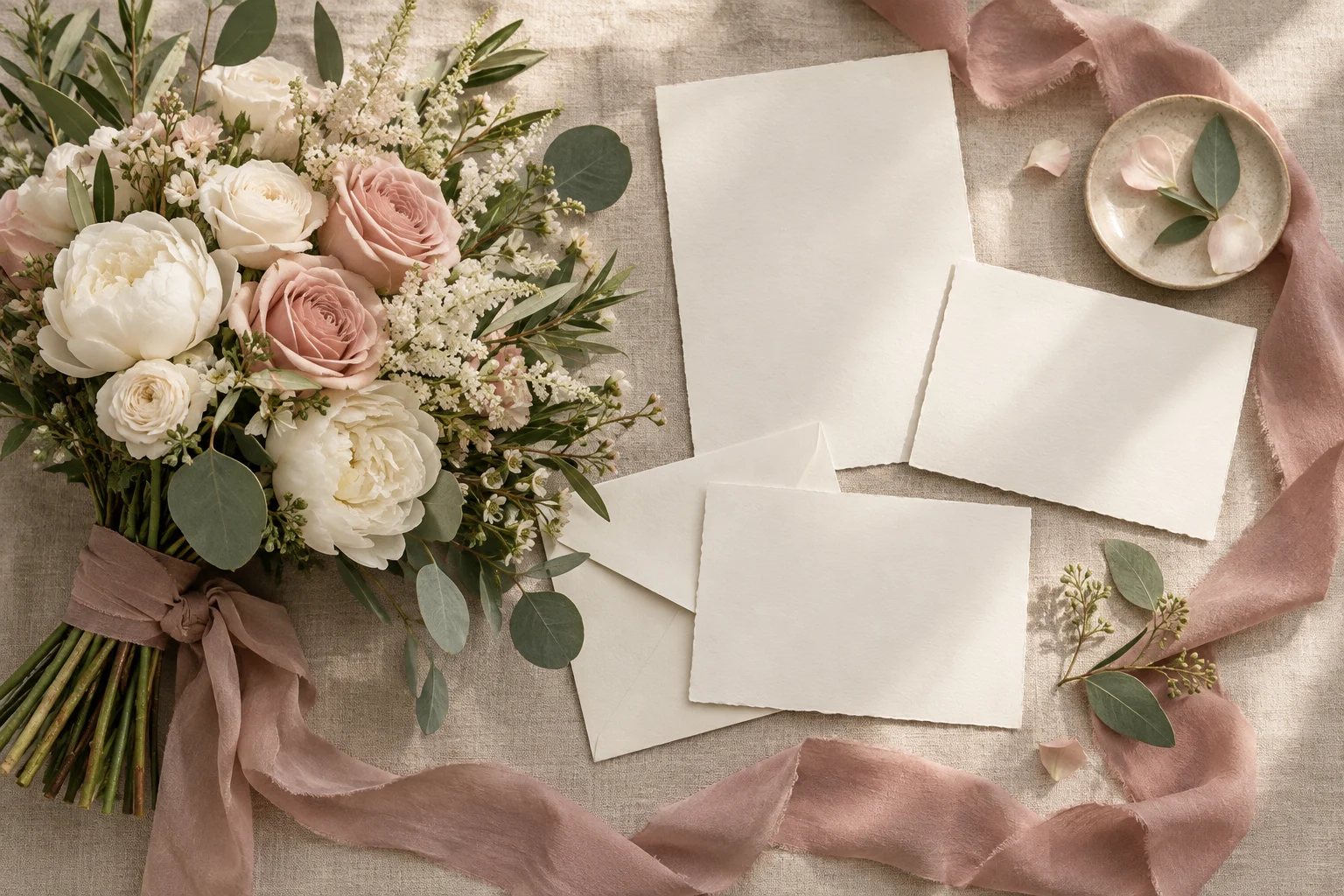
Try the palette under the dinner lighting. A cranberry fabric can look brown in a dim room, while bright white paper can feel quite sharp against cream linen. Bring actual samples together and check whether names and menus are still easy to read.
Set the table for a meal
Build one complete place setting with the caterer’s plates, water glasses, bread plate, and anything arriving later. Leave space for serving dishes if food will be shared. A table that looks full before dinner may be awkward once the meal begins.
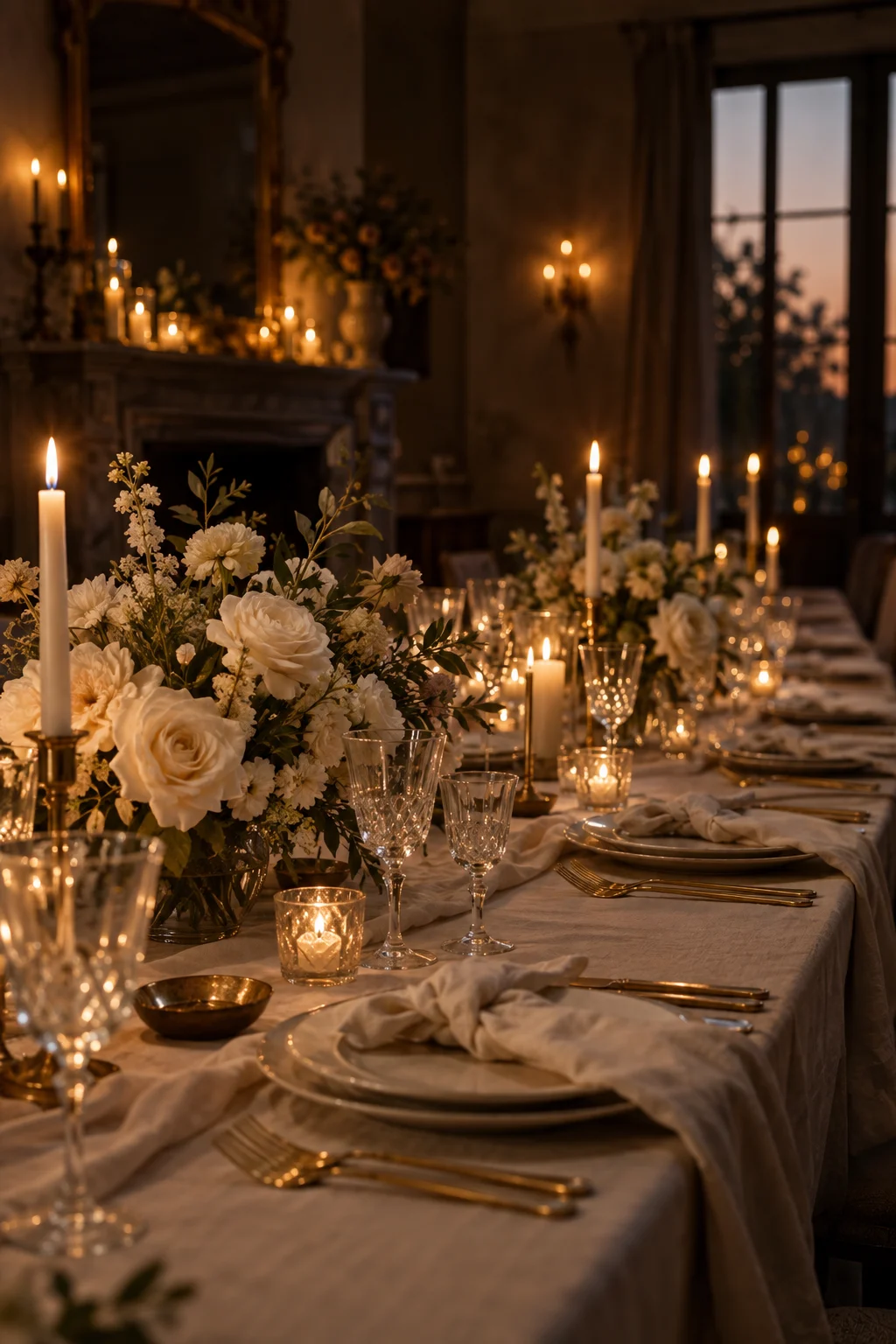
Keep arrangements out of the conversation line, and ask the venue how staff will move between chairs. Test the lighting from a seated position. If you are using battery candles, check the glow and battery life in advance; if you prefer a flame, confirm the venue’s rules first.
Choose the detail worth repeating
A deep-colored napkin at each place may give you more of the feeling you want than another centerpiece. Compare the whole cost of renting with buying, including cleaning, pressing, spares, transport, and collection. Use a plain fold and keep the place card easy to find.
Before increasing the order, invite someone to sit at your sample setting. Can they put down a bag, reach their water, and talk without moving the decoration? Keep the details that make the experience better. Let the rest go.