We're Engaged. Now What?
A calm beginning to planning a wedding together
Your first book, on us
FIRST DECISIONS
A clear, practical guide to costs, choices, and shared money decisions
Coming soon.
Explore the sample pages while we get the collection ready.
PDF books are coming soon. When orders open, Shopify will email your download links. No Tied in Bloom account is needed.
Digital book. No physical copy is shipped.
Real pages from this book, ready to explore.
Actual page from the book · Select the page to enlarge
A FEW PAGES, JUST AS THEY ARE
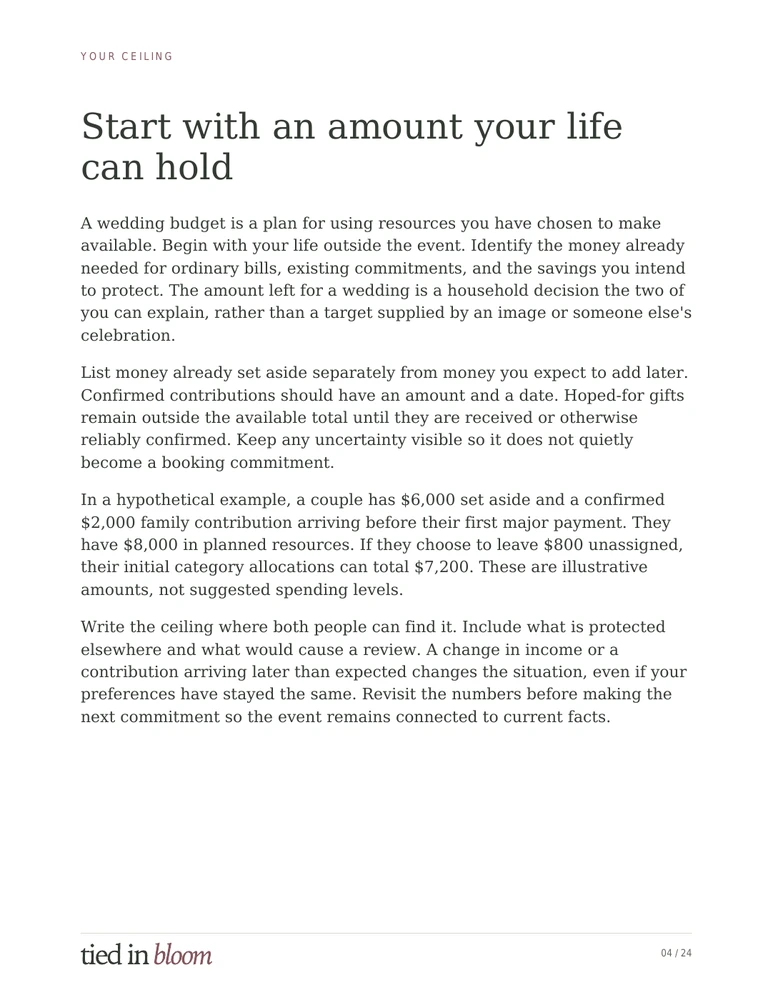
A wedding budget is a plan for using resources you have chosen to make available. Begin with your life outside the event. Identify the money already needed for ordinary bills, existing commitments, and the savings you intend to protect. The amount left for a wedding is a household decision the two of you can explain, rather than a target supplied by an image or someone else's celebration.
Give your wedding plans a money picture you can both understand, from confirmed contributions to the dates payments are due. Worked examples and writing pages help you compare full costs, see what a guest count changes, and choose tradeoffs that fit the amount you have agreed to spend.
Couples ready to turn a spending limit into practical choices.
A calm beginning to planning a wedding together
Your first book, on us
A guide to an intimate celebration with the people who matter to you
Look inside
A visit-by-visit workbook for choosing the place that fits your wedding
Look inside